Related service
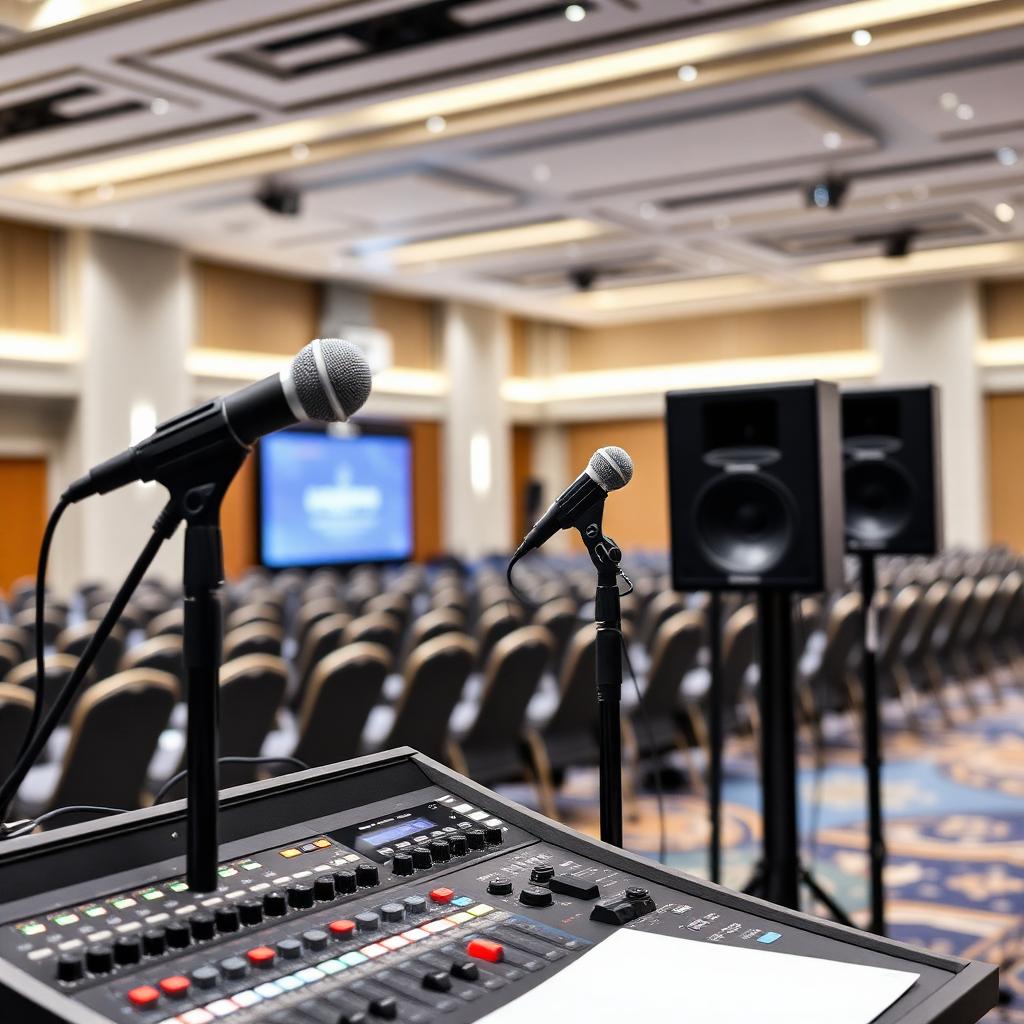
Mics, mixers, PA, and on-site AV techs for keynotes, panels, and breakout sessions.
Nobody notices conference audio when it is done right. They notice it every time a mic pops, a speaker asks 'is this thing on?', or a Q&A runner cannot find the wireless handheld. This is the checklist we hand to every corporate planner before we walk their venue.
Count your mics — then add two
Baseline for a keynote with a single speaker is one wired podium mic and one wireless lav. For a four-person panel, plan on four lavs plus two handheld wireless for Q&A. Then add one spare lav and one spare handheld, because batteries die and lavs get tangled.
Ask the vendor how many wireless channels their rig supports and whether the venue has any RF conflicts — hotel ballrooms in Union Square and downtown San Jose in particular have crowded RF environments that can kill a wireless mic mid-sentence.
Right-size the PA to the room
A 200-person breakout in a hotel meeting room needs a modest point-source PA — two powered tops on stands is usually enough. A 1,000-person general session in a ballroom needs a compact line array with delayed fills in the back third of the room.
Ceiling height matters more than square footage. High-ceiling rooms lose intelligibility fast and need more speakers pointed at more seats. Send the vendor a floor plan and ceiling measurements before the site visit.
On-site AV tech is not optional
The single biggest predictor of whether conference audio goes smoothly is whether a live engineer is mixing during the session. Drop-off-and-leave rentals fail the moment a speaker turns down their lav gain by accident.
Confirm the AV tech is on-site for the full session block, not just setup. A good engineer catches feedback before the audience does and rebalances the mix in real time as speakers move.
Rehearsals catch 90% of the problems
Schedule a 30-minute mic check with every keynote and panelist before doors open. Have them stand at the podium, walk the stage, and read a paragraph. You will catch dead batteries, uncomfortable mic placements, and speakers who need a monitor to hear themselves before the audience arrives.
For panels, do a full seated sound check with all mics live. That is when you find out that panelist three sits too close to the speaker and creates feedback.
What to put in the run-of-show
Your AV tech should have a document that lists every session, every speaker, which mic they are on, which slides are playing, and any music cues. Cue sheets that live only in the producer's head are how sessions fall apart.
- Speaker name and mic channel
- Slide advance responsibility (speaker or tech?)
- Q&A start time and mic runner assignment
- Music in/out cues and volume levels
- Break timing and background music playlist
Frequently asked
How many wireless mics do we need for a panel?
One lav per panelist plus one moderator lav, plus two wireless handhelds for audience Q&A. Add one spare of each.
Can we skip the on-site engineer to save budget?
Only for very small breakouts with one speaker and no Q&A. For any session with a panel, live music, or presentation cues, a live engineer pays for themselves the first time they save a mic.
Do you handle projection and screens too?
Conference audio is our specialty. We partner with local video AV vendors and can bundle screens and projection into a single quote on request.
Ready to book conference audio rentals?
Mics, mixers, PA, and on-site AV techs for keynotes, panels, and breakout sessions.
Conference Audio Rentals across the Bay Area
Jump to a dedicated conference audio rentals page for your city.